top of page

Wildfire Season Has Become a Business Risk Every Facility and CRE Leader Should Plan For in 2026

Wildfire season strains buildings and people. See how facilities can prepare in 2026 to reduce costs, protect tenants, and build resilience.

Ava Montini

Mar 11, 2026

Written by 

Published on

Tags

Wildfire smoke has moved from an environmental concern to a business risk for the built environment. One that affects operations, budgets, tenant trust, and even asset value. Smoke does not stay confined to forests. It drifts hundreds of kilometers into cities, infiltrates through HVAC intakes, window gaps, and loading docks, and turns buildings into frontline defense systems for the people inside them.


For facility managers, this shift reframes wildfire smoke as a predictable operational stress event, on par with a winter storm, a power outage, or a heat wave. For CRE executives, it reframes it as a reputational and financial challenge; one that determines tenant satisfaction, energy costs, and the long-term resilience of portfolios.


The Business Side of Smoke Days

When wildfire smoke drifts into a region, the strain on buildings is both immediate and multi-layered. Filters load faster, pushing fans to use more power just to keep airflow steady (EPA). As systems deviate, alarms trigger more frequently, and maintenance teams are pulled from planned tasks into reactive changeouts (Facility Executive). Meanwhile, vendors across the region see surging demand; parts and pads that usually arrive in days might take a week or more (NC State). That delay alone can unravel even the most rigorously planned preventive maintenance schedules.


Inside the building, occupants feel a different side of the same event. They note scratchy throats, irritated eyes, or rooms that feel stale or “heavier” when fresh air intake is reduced (AirNow). They see Air Quality Index alerts on their phones and news headlines escalating (EPA AQI). In those moments, the question is no longer just whether systems are responding, it’s: Is the building protecting me? When communication is missing or unclear, perception can trump technical measures, tipping the balance from confidence to complaints (BOMA).


Why It Matters More in 2026

The stakes are rising. Multiple studies show that during wildfire events, indoor air can reach one-third to three-quarters of outdoor particulate concentrations in buildings lacking robust mitigation (PMC). Residential buildings in fire-affected areas have shown infiltration ratios reflective of this risk (PMC). In some wildfire-impacted care environments, indoor concentrations have peaked near 200 µg/m³ (NCBI). In contrast, well-configured filtration systems often reduce that exposure to roughly 43% of outdoor levels, showing how effectively mitigation can work (NCCEH).


The human health impacts are significant. Fine particulate matter (PM₂.₅) is linked to asthma flare-ups, reduced lung function, and cardiovascular stress (EPA). Sensitive populations (children, older adults, and those with pre-existing conditions) are most at risk (CDC). However, research also shows that even healthy adults are not immune to short-term exposure (PubMed). Harvard-led studies estimate that wildfire smoke has caused over 15,000 premature deaths in the U.S. in recent decades, with an associated economic burden of $160 billion (Harvard). For employers and property leaders, this translates into absenteeism, healthcare costs, and measurable productivity loss (National Bureau of Economic Research).


At the same time, smoke is a mechanical stressor. It accelerates filter clogging, pushes fans outside their normal operating range, and drives up energy consumption (ScienceDirect). Facility executives consistently report higher unplanned maintenance costs during wildfire season, along with shortened asset life for critical HVAC equipment (Facility Executive). Viewed at scale, these costs ripple upward into operational budgets and capital planning, making smoke days not just a maintenance issue but a financial liability.


What Smoke Events Do to Commercial HVAC Systems


Wildfire smoke can be seen as just “dirty air", but to get deeper, it is a dense mix of ultrafine particles, ash, organic compounds, and combustion byproducts that behave differently from typical urban pollution.


When these particles enter HVAC systems, three operational challenges occur simultaneously:


  • Rapid filter loading and front loading: Fine smoke particles quickly accumulate on the front face of filter media rather than distributing evenly through the depth of the filter. This “front loading” effect increases resistance to airflow much faster than normal particulate loading.

  • Fan energy increases: As pressure across the filter bank rises, fans must work harder to maintain airflow.

  • Airflow imbalance: Systems designed for stable pressure conditions may struggle to maintain balanced ventilation across zones.


During heavy smoke events, these mechanical effects can compound quickly. What begins as a minor filtration issue can cascade into comfort complaints, airflow deviations, and unexpected service calls.


Rethinking Preparedness

Preparedness today requires more than having spare filters in storage. Facilities that treat smoke season as part of their risk portfolio are proving more resilient. Research shows that buildings operating with lower baseline pressure drops have more headroom when smoke events occur, allowing systems to maintain airflow without tipping into alarm states (ScienceDirect). Forward-looking teams also map their most critical zones (like labs, classrooms, care units, or executive suites) and prioritize them during smoke events, an approach recommended in EPA guidance for schools and commercial buildings (EPA).


Another resilience factor is vendor readiness. Case studies after the 2020 smoke season showed that supply chain bottlenecks caused delays of days to weeks in replacing filters and components, leaving unprepared facilities exposed (NC State). Facilities that negotiated priority contracts in advance were able to maintain schedules even during regional demand surges. Similarly, using AQI forecasts and on-site PM₂.₅ sensors has been shown to improve response times; by acting early, facilities reduce exposure and minimize tenant complaints (PMC).


Wildfire readiness also intersects with broader sustainability and ESG commitments. Poor indoor air quality during smoke events undermines health-related certifications like WELL and LEED, while higher fan energy use increases a building’s carbon footprint (USGBC; IWBI). Integrating smoke resilience into ESG strategies provides measurable benefits for investors and stakeholders while demonstrating a proactive approach to tenant wellness.


Three Questions Facility Leaders Should Ask Before Smoke Season


Forward-looking facility teams increasingly treat wildfire smoke the same way they treat winter storms or heat waves: as a seasonal operational risk.


Before wildfire season begins, three questions can help identify vulnerabilities:


1. How much airflow headroom does the HVAC system have?

Buildings operating near maximum pressure limits may struggle when filters load rapidly during smoke events.


2. Are replacement filters and components secured in advance?

Regional smoke events often trigger sudden demand spikes, delaying shipments and increasing costs.


3. Are response protocols clearly defined?

Teams should know when to increase filtration, adjust outdoor air intake, and communicate with tenants.


Facilities that answer these questions early often respond faster and maintain better building performance during smoke days.


The Bottom Line

Facilities without strong preparedness can see indoor pollutant levels rise to 75% of outdoor concentrations during wildfire events, while prepared buildings cut that exposure nearly in half (NCCEH). Harvard-led analyses estimate that wildfire smoke causes tens of billions of dollars in annual economic damage, largely through absenteeism and healthcare costs (Harvard). From a mechanical standpoint, smoke accelerates filter clogging, forces fans to operate at higher energy use, and shortens asset lifespan, driving up costs across operations and capital planning (Facility Executive).


The buildings that are prepared today will reduce alarms, complaints, and unplanned expenses tomorrow, while earning the trust of the people inside. Tenants will remember which buildings felt steady, cared for, and resilient when the outside air was anything but.

AI, Grid Stress, and the Rising Cost of Cooling

  • Writer: Ava Montini
    Ava Montini
  • Feb 24
  • 4 min read

How artificial intelligence is reshaping electricity markets and redefining efficiency inside data centers and real estate portfolios


Across North America, electricity load forecasts are being revised upward as hyperscale campuses, colocation expansions, and AI clusters come online. Grid operators are responding to a new reality: computing growth is accelerating faster than generation and transmission capacity.
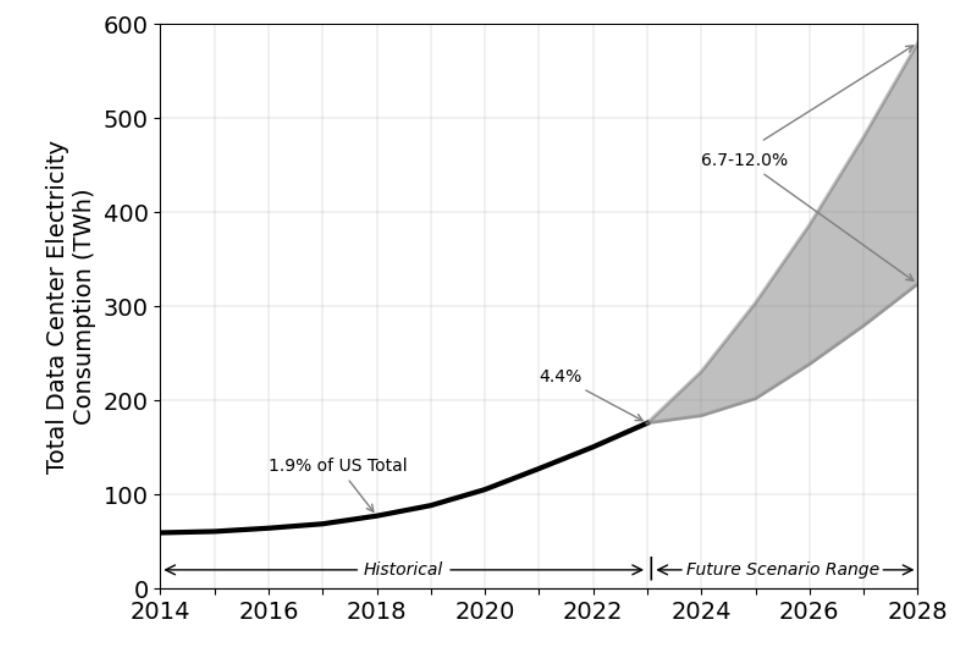


Global data center electricity consumption could reach 1,000 terawatt-hours annually by 2030, roughly equivalent to the annual consumption of Japan. In the United States, PJM Interconnection has reported a sharp increase in capacity auction prices as new large-load customers, including AI-driven data centers, enter the interconnection queue.


Goldman Sachs forecasts a 175% surge in global data center power demand by 2030, a significant upward revision driven by the rapid adoption of AI infrastructure and intensive GPU requirements. This surge is expected to raise data centers’ share of U.S. electricity consumption to approximately 8% and contribute to a 10–15% increase in European power demand over the next decade.


AI Workloads Are Structurally Different


Previous digital expansion cycles, including early cloud adoption, drove steady and predictable growth. AI changes the profile of demand.


Training large language models requires sustained, high-density compute over extended periods. Inference activity multiplies that demand across millions of daily interactions. Rack densities are climbing. Thermal loads are intensifying. Mechanical systems are operating closer to their performance limits for longer durations.


Higher density translates directly into greater airflow sensitivity and tighter thermal tolerances. Small inefficiencies that were once negligible now compound materially across 8,760 operating hours per year.


Cooling Is a Major Line Item, Not a Support Function


In many modern facilities, mechanical systems account for 30 to 40 percent of total site energy consumption. That includes chillers, pumps, CRAH and CRAC units, and most consistently, fans.


Fan energy is particularly sensitive to system resistance. Based on affinity laws, fan power scales approximately with the cube of airflow. As static pressure increases, required fan energy rises disproportionately. Even modest increases in resistance can translate into meaningful increases in kilowatt draw.

Filtration is one of the most persistent contributors to system resistance. As filters load or when they have a high baseline pressure drop, fans compensate continuously. This is not a temporary event. It is a compounding operational penalty.


For a 20-megawatt data center, cooling and mechanical systems often account for 30 to 40 percent of total facility energy use. That equates to roughly 6 to 8 megawatts dedicated to cooling infrastructure.


Even modest efficiency improvements at this scale are financially meaningful. A 5 percent reduction in cooling-related fan energy would reduce load by approximately 300 to 400 kilowatts. At an electricity price of $0.10 per kilowatt-hour, that translates to roughly $260,000 to $350,000 in annual energy cost savings, before considering demand charges or capacity pricing exposure.

In regions with constrained supply or rising capacity costs, the economic value of that reduction increases further.


Grid Stress Is Changing the Economics of Efficiency


Electricity markets are tightening in regions experiencing concentrated data center growth. Capacity auctions in PJM have reflected the strain of new large-load interconnection requests. Transmission upgrades require time. Generation additions face permitting and capital constraints.


As reserve margins narrow, price volatility increases. Capacity charges, peak demand pricing, and long-term power purchase agreements are becoming more complex and more expensive.


For data center operators, efficiency becomes a hedge against volatility. Each kilowatt not consumed reduces exposure to price swings and capacity premiums. For REITs with diversified portfolios, it strengthens net operating income resilience across properties facing similar market pressures.

Scope 2 emissions reporting adds another layer of accountability. Institutional investors increasingly evaluate carbon intensity alongside operating performance. Mechanical efficiency directly influences both.

Energy savings are no longer incremental improvements. They are risk mitigation tools.


Designing for AI Without Expanding Energy Budgets


The strategic response does not require speculative technology. It requires disciplined optimization of existing systems.


Three priorities stand out:


1. Reduce persistent static pressure

Airflow resistance accumulates silently over time. Low-pressure, high-efficiency filtration technologies reduce baseline resistance while maintaining particulate capture performance. This lowers continuous fan energy and protects downstream equipment.


2. Optimize thermal management architecture

Variable-speed fans, containment strategies, and calibrated ventilation align airflow with actual load rather than worst-case assumptions. This stabilizes thermal performance under higher rack densities.


3. Institutionalize monitoring-based commissioning

Continuous diagnostics prevent efficiency drift. Small degradations in airflow or heat exchange are corrected before they become embedded in long-term energy profiles.


The Competitive Advantage of Thermodynamic Discipline


Artificial intelligence will continue to expand electricity demand. That trajectory is supported by credible projections from global energy authorities and financial institutions. The constraint is not computing ambition. It is infrastructure capacity.

Facilities that treat thermodynamic efficiency as core infrastructure rather than as an ancillary optimization will outperform in this environment. Lower static pressure, calibrated airflow, and disciplined mechanical management translate directly into reduced exposure to grid stress and electricity price escalation.

The economics are clear. As AI reshapes the demand curve, cooling efficiency becomes one of the most controllable variables in an increasingly uncontrollable market.


Data centers are powering intelligence.

Efficiency will determine who powers it profitably.

Explore expert insights, stay up-to-date with industry events, and gain a deeper understanding of the developments shaping the built environment.

Subscribe to our monthly newsletter below for exclusive early access to Blade's Insights content.

Insights Hub

Lorem ipsum dolor sit amet, consec tetur adipiscing elit. Sit quis auctor 

Lorem ipsum dolor sit amet cotetur 

Lorem ipsum dolor sit amet, consec tetur adipiscing elit. Sit quis auctor 

Lorem ipsum dolor sit amet cotetur 

Lorem ipsum dolor sit amet, consec tetur adipiscing elit. Sit quis auctor 

Lorem ipsum dolor sit amet cotetur 

bottom of page