top of page

AI’s Energy Appetite: What Data Centers Mean for the Future of Electricity Prices

Discover how AI-driven data centers are reshaping electricity demand, prices, and why smarter HVAC and efficiency are critical for sustainable growth.

Ava Montini

Jan 27, 2026

Written by 

Published on

Tags

Powering intelligence, shaping energy


Artificial intelligence has gone from “what if” to “what now.” We use it to draft reports, analyze data, streamline workflows, and even generate design ideas. But while the results appear on our screens instantly, what powers them is anything but invisible.


Behind every AI tool is a data center; rows of servers drawing massive amounts of power and generating equally massive amounts of heat. And with AI adoption soaring, those facilities are putting real pressure on our electricity grids.


Bloomberg recently reported that in PJM, the largest U.S. grid, capacity prices jumped sharply as AI-driven data center demand climbed (Bloomberg). For operators, this is a direct hit to energy budgets.


So while AI is exciting, it comes with a new operational reality: efficiency in cooling, airflow, and HVAC isn’t optional. It’s the difference between runaway costs and sustainable growth.


Why AI is different from past computing booms


Previous waves of digital growth (like cloud adoption) drove steady data center expansion. But AI is different. Training large models consumes enormous amounts of energy. The International Energy Agency estimates that data center electricity use could nearly double by 2030 to around 1,000 TWh, roughly equal to Japan’s entire annual consumption (IEA).


And it’s not just training. Inference: the everyday process of users asking questions or running AI tasks is multiplying demand across millions of devices. Goldman Sachs forecasts a 165% increase in data center power demand by 2030, largely due to AI (Goldman Sachs).


Cooling: a hidden energy driver


When people think about data centers, they picture racks of servers. But behind that computing load is another energy giant: cooling.

HVAC, chillers, pumps, and fans often make up 30–40% of total energy use in data centers (U.S. DOE). That means the “support systems” keeping servers at safe temperatures can rival the IT equipment itself in energy demand.


And because these systems run 24/7, even small inefficiencies snowball:

  • A high-resistance filter forces fans to draw extra kilowatts all day, every day.

  • A dirty coil reduces heat transfer, stretching compressor runtimes.

  • A miscalibrated damper throws airflow off balance, raising both costs and emissions.


Clogged filters can cut supply airflow by over 35%, driving higher fan power and cooling loads (MDPI). Others highlight how loaded filters in constant-speed systems directly increase electricity use (University of Texas at Austin).


Now scale that across a hyperscale AI-driven facility. A 3% efficiency penalty may look small on paper, but in practice, it can cost hundreds of thousands of dollars annually and add unnecessary CO₂e to your footprint.


That’s why low-pressure, high-efficiency filtration matters. It cuts resistance without sacrificing capture, reducing fan energy hour after hour. For operators under pressure from rising power prices and sustainability goals, it’s one of the simplest ways to shrink cooling costs while protecting uptime.


Why efficiency pays off more now

Energy savings have always lowered costs. But as grids get stressed and data center demand rises, the value of each saved kilowatt is climbing. Bloomberg recently reported that capacity prices on PJM, the largest U.S. grid, have spiked because of new data center growth (Bloomberg).


In practical terms, this changes the math:

  • A coil cleaning that once took years to pay for itself can now pay back in just a few months.

  • Smarter controls and calibrated ventilation keep you protected when prices swing.

  • Low-pressure filtration quietly reduces fan energy every hour, stacking up bigger savings as electricity prices rise.


The bottom line is that efficiency has become one of the fastest and most reliable ways to control operating costs in an unpredictable energy market.


Building smarter, not just bigger

For operators, the roadmap isn’t a mystery. The tools are already here:

  • Low-pressure filtration to keep fans efficient hour after hour.

  • Adaptive cooling strategies like variable-speed fans, economizers, and containment to right-size energy use.

  • Monitoring-based commissioning and diagnostics to stop efficiency losses before they become routine.

  • Load shifting and grid-aware operations to tap cleaner, cheaper hours of power (IEA).


Every watt counts

As AI expands, data centers will continue to carry a heavier share of global electricity demand. That makes efficiency less of an option and more of an operating requirement.


The lesson is simple: efficiency and reliability are not competing goals. When facilities prioritize both, they not only manage rising energy costs but also reduce their carbon footprint in measurable, reportable ways. AI may be shaping the demand curve, but how operators respond will shape the industry's long-term sustainability.

Toronto Life: Transforming The Country’s Indoor Air Technology For The Better

  • Writer: Jennifer Crowley
    Jennifer Crowley
  • Jul 27, 2023
  • 2 min read

Updated: Jul 9, 2024

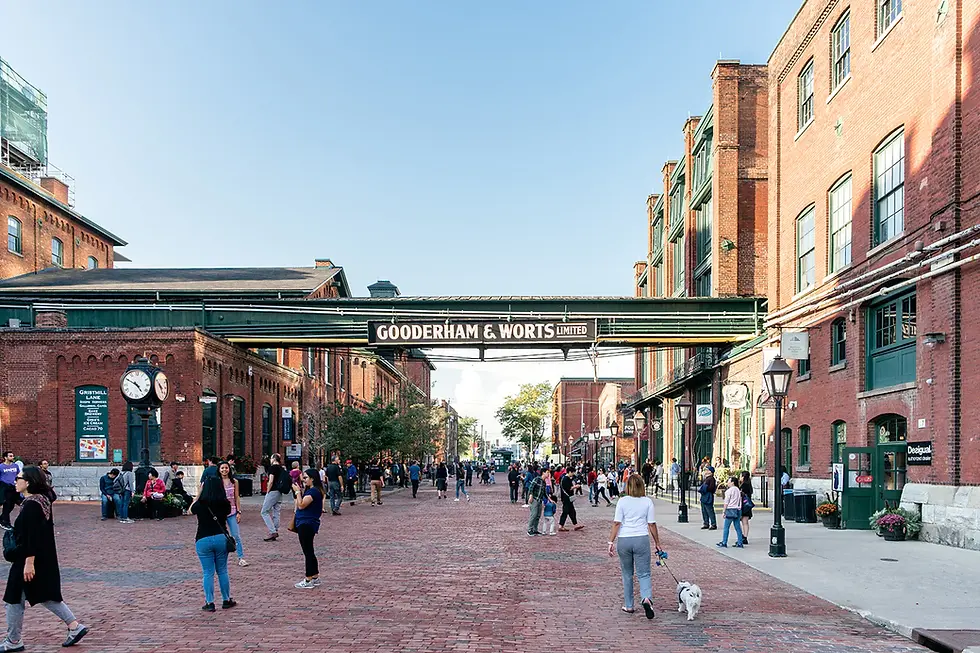
Photo of Gooderham Worts building in Toronto's historic Distillery District
Indoor Air can be two to five times more polluted than outdoor air, a statistic that drew interest from Toronto’s Gooderham & Worts Distillery District.

Blade Air was recently featured on Toronto Life – through in-depth reporting, intelligent analysis and quality writing, Toronto Life offers an exciting, essential and entertaining guide to life in Toronto.


Founded to develop zero-waste carbon filters in 2017, co-founders and brothers Joe Fida, aged 28, Aedan Fida, 26, and friend Giancarlo Sessa, 26, pivoted during the pandemic to air purification technology and indoor air quality. With the foresight and vision to realize air would become the next frontier of health care, they are on a mission to educate and provide the tools needed to provide clean air for all.


For Sessa and the Fida brothers, the future is clear: clean air for all.


“When we entered the air filtration industry, it was really important for us to disrupt the industry and do things differently,” said Giancarlo Sessa, chief strategy officer and co-founder of Blade Air. “In air filtration, there is no one-size-fits-all approach so it was critical for us to offer a range of solutions that can be tailored to each of our customers’ needs and existing HVAC systems.”


Unlike its competitors who typically manufacture one product, Blade Air offers a suite of products, including HEPA, electrostatic, carbon and UV-C filtration, delivering a customized approach for every demand.


Since its inception, the founders have been smashing the status quo and debunking common misconceptions about indoor air quality—most prominently that indoor air can be two to five times more polluted than outdoor air, a statistic that drew interest from Toronto’s Gooderham & Worts Distillery District. Widely regarded as Canada’s premier arts and culture destination, the Distillery District is an internationally acclaimed village of brick-lined streets, known for its rich history and identity with buildings that have been preserved and used for more than 150 years.


“There is a common misconception that you have to choose between energy efficiency and improved indoor air quality, and that’s simply not true,” said Joe Fida, chief innovation officer and co-founder of Blade Air. “Finding that symbiotic balance between the two is our north star, and is the reason that we do what we do.”


The Blade Air founders’ passion for air runs deep. With over 30 employees, $75M in revenue and a presence in thousands of school boards and government buildings throughout Canada, Blade Air is considered one of the most prominent players in the market.

Explore expert insights, stay up-to-date with industry events, and gain a deeper understanding of the developments shaping the built environment.

Subscribe to our monthly newsletter below for exclusive early access to Blade's Insights content.

Insights Hub

Lorem ipsum dolor sit amet, consec tetur adipiscing elit. Sit quis auctor 

Lorem ipsum dolor sit amet cotetur 

Lorem ipsum dolor sit amet, consec tetur adipiscing elit. Sit quis auctor 

Lorem ipsum dolor sit amet cotetur 

Lorem ipsum dolor sit amet, consec tetur adipiscing elit. Sit quis auctor 

Lorem ipsum dolor sit amet cotetur 

bottom of page