What Wildfire Smoke Days Feel Like From A Facility vs. Tenant Perspective
- Ava Montini

- Feb 10
- 6 min read
Two worlds, one building—and why proactive resilience matters
Setting the stage: smoke isn’t just outdoors
We all know the feeling: one day the sky is clear, and the next, the horizon turns hazy. Wildfire smoke doesn’t stay in the forest. It drifts hundreds of kilometers, carrying fine particles (PM₂.₅) and gases that make their way into our cities and, inevitably, our buildings (EPA).
And once smoke is outside, it doesn’t stop at the front door. Even the best-sealed buildings aren’t immune. It slips in through HVAC intakes, leaky windows, door gaps, and loading docks (EPA Schools & Commercial Buildings). Studies show that indoor air during heavy smoke events can reach one-third to three-quarters of outdoor levels if buildings aren’t prepared. That means tenants still feel it, and facility teams are left carrying the pressure.
What’s important to understand is that smoke days aren’t rare exceptions, but rather annual seasonal events. And like snowstorms or power outages, they’re “load events” that strain systems, stretch teams thin, and test how well a building can protect the people inside.
The facility side of smoke days
For facility teams, smoke days are a stress test for people, systems, and processes.
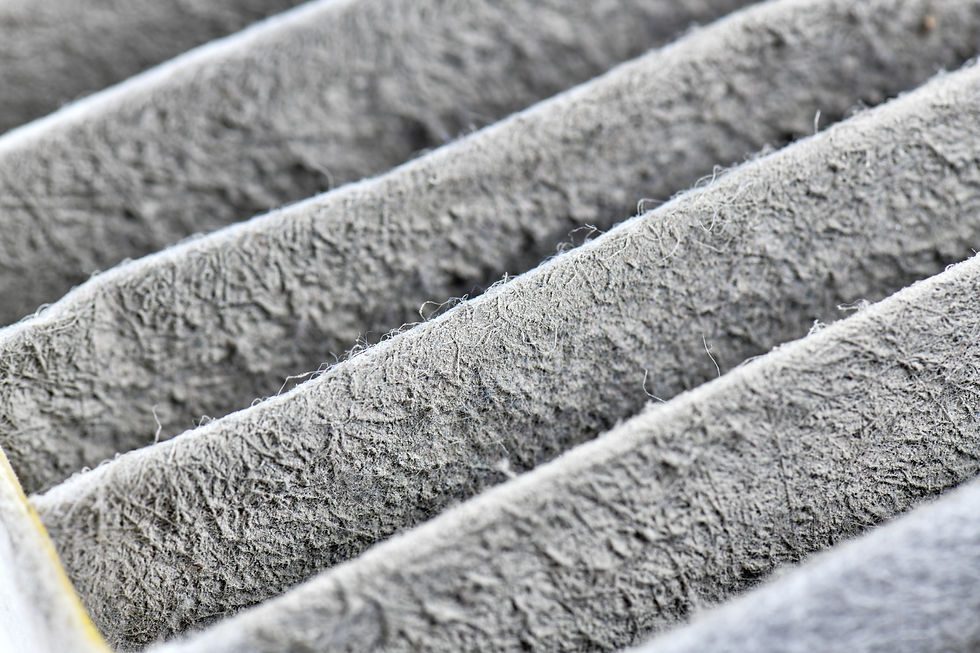
When smoke enters a region, the operational load spikes almost immediately. Filters clog faster than expected, which forces fans to work harder to maintain airflow. Research shows filter performance can drop rapidly in smoky conditions while resistance builds more slowly, pushing systems off their normal operating curve (Arxiv).
On the ground, that means alarms trip more often, unplanned changeouts eat up staff hours, and tenant tickets pile up faster than they can be resolved. Leadership often asks for reports on energy use, tenant comfort, and risk status—while teams are still mid-response. And because fans are working harder, energy use climbs, putting additional strain on operating budgets (Facility Executive).
In short, a smoke day forces facility managers to balance three competing demands at once:
Keep systems running under abnormal load.
Manage communication with tenants and leadership.
Solve logistical problems like vendor delays and staff shortages.
That’s why wildfire season needs to be treated as a predictable operational load event, not an occasional anomaly.
The tenant experience
When wildfire smoke affects a region, the people inside buildings notice quickly, even if they don’t know the technical details.
Common physical effects include dry eyes, scratchy throats, mild headaches, or fatigue, which are linked to fine smoke particles (PM₂.₅) that can still enter buildings despite filtration (AirNow). Occupants may also notice a faint smoky odor in hallways or shared spaces. These cues, though subtle, signal that the outside environment is affecting indoor comfort.
Another frequent observation is that rooms feel “stale” or stuffier. This often happens because outside air intake is reduced to keep smoke out, meaning less fresh air circulation than usual. While this is a standard operational response, it can leave tenants feeling like the air is heavy or stagnant.
There’s also a psychological component. Air quality alerts on phones and news headlines make people more aware of the situation. Without clear building communication, tenants can feel uncertain about whether enough is being done. Research shows that when people don’t understand what’s happening indoors during smoke events, their perception of safety declines, even if actual pollutant levels are controlled (BOMA Frontline).
From a wellness perspective, most healthy adults recover quickly from brief exposures. But sensitive groups (children, older adults, and those with asthma or heart disease) can experience stronger impacts from even short-term smoke exposure (EPA). That makes communication and reassurance especially important in spaces like schools, healthcare facilities, and multi-tenant offices.
In short, while facility teams see smoke days as operational stress events, tenants experience them as comfort and confidence events. Their main concern is whether the air feels safe and whether the building is taking the situation seriously.
Two Sides of the Same Story
Smoke days are one event experienced two ways.
For facility teams, it’s alarms, supply delays, energy spikes, and leadership expecting answers while staff juggle urgent tasks. For tenants, it’s the everyday signals—scratchy eyes, a smoky odor, or rooms that feel stuffy. One side is measured in workloads and KPIs; the other in comfort and confidence.
Preparation closes the gap. When facilities are ready, operations stay steady, complaints drop, and tenants feel looked after. The result isn’t just smoother performance—it’s trust in the building when it matters most.
What preparedness really looks like
1. Map and tier “critical zones”
Not all spaces are equal. Facility teams can gain disproportionate impact by identifying critical zones (areas where tenant perception, operations, or health sensitivity is highest) and prioritizing those for tighter control, filtration, and supplemental support.
For example, during wildfire smoke events, schools, clinics, or labs are often given priority for cleaner air interventions. This approach aligns with state policies recommending that public buildings adopt tiered responses based on use and occupant vulnerability. Environmental Law Institute
2. Pre-arrange vendor or priority supply contracts
In smoke events, supply chains buckle under surging demand. Facilities that pre-negotiate vendor priority, emergency allocations, or just-in-time buffer arrangements stand a much better chance of holding ground when the market tightens. In climate risk and infrastructure planning, supply chain resilience is a strong theme; analysts now argue that the key differentiator for resilient systems is not just resource availability but pre-arranged capacity under stress. World Economic Forum Reports
3. Automate or pre-approve communication templates
When wildfires hit, everyone expects clarity. Having short, plain-language messages pre-approved (for tenants, staff, and leadership) shaves off triage time. Some public health programs now include modular communication templates for smoke alerts to streamline action and reduce confusion. Environmental Law Institute
4. Model trends, not thresholds
Facilities often react only when alarms or thresholds are crossed. But resilient operators build trend models (observing how PM, pressure differentials, or load drift over hours or days) and use those to anticipate trouble. This predictive mindset mirrors how climate-adaptive infrastructure planning uses trends over thresholds to trigger safeguards. World Economic Forum Reports
5. Use smoke events as resilience tests
Smoke days offer a live scenario to stress systems—mechanical, staffing, and communications. Smart teams treat them like drills: “If this fails, how do we pivot?” Incorporating smoke days into broader resilience plans ensures that those learnings carry forward to other stresses, not just wildfire. Morrison-Maierle
6. Connect the plan to ESG, risk, and stakeholder value
The case for wildfire preparedness becomes much stronger when tied to ESG metrics, tenant trust, and operational risk. As cities and regulators increasingly expect buildings to account for climate-related risk, having a wildfire readiness plan becomes a tangible proof point, in both operations and investor/tenant confidence. knowledge.uli.org
The research voice: why it matters
During the 2020 wildfire season, monitoring across multiple buildings found that facilities using high-efficiency filtration strategies kept smoke exposure almost 50% lower than unprotected buildings. Median indoor/outdoor ratios were 0.43 vs. 0.82 (Arxiv). In elder care facilities, indoor concentrations still peaked between 43.6 and 202.5 µg/m³ depending on design and filtration, with infiltration rates ranging from 22% to 76% (PubMed). By comparison, wildfire-specific studies show well-filtered buildings sometimes kept indoor PM₂.₅ under 15 µg/m³, while unprotected ones averaged closer to 34 µg/m³ (NCCEH).
The health impacts scale with those numbers. Fine particulate matter (PM₂.₅) is strongly linked to coughing, aggravated asthma, reduced lung function, cardiovascular stress, and premature death. A Harvard-led study estimated that wildfire-driven smoke caused 15,000 premature deaths in the U.S. from 2006–2020, with an economic burden of $160 billion (Harvard). Even short-term exposure can increase hospital admissions and ER visits for respiratory and cardiac conditions (AirNow).
And it isn’t just about people. Mechanical stress rises too. Heavy smoke loads accelerate filter clogging, drive fan energy use higher, and shorten HVAC asset life. Facility executives consistently report that smoke seasons push unplanned maintenance costs upward and increase downtime risk (Facility Executive).
The takeaway is simple: smoke days are expensive on every front. Facilities that plan ahead don’t just protect health, they protect budgets, reduce downtime, and maintain tenant trust when it matters most.
Smoke days aren’t just operational challenges—they’re human ones.
Smoke days remind us that facilities operate at the intersection of systems and people. For teams, they create extra load: more equipment checks, unexpected changeouts, and added reporting. For tenants, they create noticeable changes in comfort: air that feels heavier, irritation from particles, or the uncertainty that comes with health alerts.
Preparedness helps align those two experiences. When systems have margin and teams have a playbook, operations stay steadier, and tenants feel reassured that the building is being managed with care.
Research shows that good filtration can cut indoor smoke exposure nearly in half, lower health risks for sensitive occupants, and reduce the unplanned maintenance costs that often follow heavy smoke days.
But the bigger insight is this: preparedness pays off twice. First in operational efficiency, and again in tenant trust.
Resilience, then, isn’t just about surviving smoke season. It’s about designing facilities to handle disruptions as part of normal operations. Two worlds, one building and the preparation you do now sets the tone for how both will experience the next smoke event.