

Indoor Air Quality (IAQ) Assessments for Commercial Buildings: A Key to Healthier Workplaces
Updated: Jul 10, 2024

In the ever-evolving landscape of workplace health and safety, Indoor Air Quality (IAQ) in commercial buildings has rapidly emerged as a critical factor, further highlighted by the identification of syndromes such as Sick Building Syndrome (SBS) and Building Related Illness (BRI). These conditions, where occupants experience acute health and comfort effects linked to time spent in a building, underscore the vital importance of maintaining optimal IAQ.
Furthermore, events like the COVID-19 pandemic have cast a spotlight on the role of IAQ in the transmission of airborne diseases. The pandemic has triggered a renewed emphasis on effective ventilation and air purification strategies in indoor spaces, particularly within commercial buildings, aligning with the broader goals of health, safety, and well-being in workplace environments. This comprehensive guide aims to illuminate the intricacies of professional IAQ assessments, emphasizing their significance in today's environment.

Understanding IAQ in Commercial Buildings
Indoor Air Quality refers to the quality of air within and around buildings, especially concerning the health and comfort of occupants.
Why is IAQ Important in Commercial Settings?
Health Implications: The most significant factor is the impact of IAQ on health. Poor indoor air quality has been linked to a variety of health issues, ranging from short-term effects like headaches, eye irritation, and fatigue, to long-term consequences such as respiratory diseases, heart disease, and even cancer. Given that people typically spend about 90% of their time indoors, the quality of indoor air is crucial for overall well-being. The U.S. Environmental Protection Agency (EPA) reports that indoor air can be significantly more polluted than outdoor air, potentially leading to health issues like asthma and respiratory infections.
Environmental Factors: There's a growing awareness and concern about environmental health, including the quality of air in indoor environments. Public awareness campaigns, media coverage, and academic research have highlighted the importance of healthy indoor air, making it a priority for employers, building owners, and occupants.
Productivity and Comfort: Research, such as the studies conducted by the Harvard T.H. Chan School of Public Health, has demonstrated a clear link between IAQ and cognitive function, including concentration, productivity, highlighting that optimal air quality can lead to as much as an 8-11% increase in productivity. This understanding has motivated businesses to improve IAQ as a means to enhance employee efficiency and satisfaction.
Legal and Compliance Drivers: Increasingly stringent regulations regarding workplace environments, including air quality standards set by organizations such as OSHA (Occupational Safety and Health Administration) and ASHRAE (American Society of Heating, Refrigerating and Air-Conditioning Engineers), have compelled businesses to pay closer attention to IAQ. Non-compliance can result in legal consequences and financial penalties.
Cost Savings: There's a growing trend toward sustainable and green building practices, which include the enhancement of IAQ. Buildings with better air quality are often more energy-efficient and environmentally friendly, aligning with broader goals of sustainability. Energy-efficient IAQ practices not only enhance air quality but can also lead to significant energy savings, as reported by the World Green Building Council.
Components of a Quality IAQ Assessment in Commercial Buildings
Professional IAQ Assessments in Commercial Buildings are integral for ensuring a healthy, productive, and legally compliant environment.

Components of a Quality IAQ Assessment in Commercial Buildings
Professional IAQ Assessments in Commercial Buildings are integral for ensuring a healthy, productive, and legally compliant environment.
Identifying Sources of Pollution
Identifying pollutants in an IAQ assessment is a critical step in understanding and improving the air quality within a building. Pollutants can be broadly categorized as:
Chemical Pollutants: VOCs, often found in paints, cleaning agents, and office equipment, can cause headaches and dizziness. A study by the Lawrence Berkeley National Laboratory highlighted that VOC levels in office buildings are consistently above outdoor levels.
Biological Contaminants: Mould and bacteria, thriving in damp areas, can lead to allergic reactions and respiratory issues. The EPA estimates that about 70-90% of buildings have some form of dampness or mould problem, which can exacerbate or cause health issues.
The World Health Organization (WHO) notes that living or working in a building with mould and dampness increases the risk of respiratory symptoms by 40-50%.
OSHA recognizes occupational asthma as a significant health problem in the workplace, with biological contaminants being a contributing factor. Research indicates that about 15% of asthma cases in adults are linked to occupational exposures, including exposure to biological agents.
Particles and Allergens: Dust, asbestos, and pollen, common in older buildings, can aggravate respiratory conditions.
Dust:
Prevalence and Impact: Dust is a common issue in many buildings, particularly older ones with accumulated particulate matter. The American Lung Association has indicated that dust mites, often found in dust, are a known trigger for asthma and allergies. Approximately 20 million Americans are allergic to these tiny creatures.
Asthma and Allergies: The National Institutes of Health (NIH) reports that exposure to household dust can exacerbate asthma symptoms in up to 60% of people with this condition.
Asbestos:
Health Risks: Asbestos, once a popular building material, is now known to be a significant health hazard. WHO estimates that around 125 million people worldwide are exposed to asbestos at the workplace.
Asbestos-Related Diseases: According to the EPA, there are about 12,000 to 15,000 deaths per year in the U.S. from asbestos-related diseases, including mesothelioma, lung cancer, and asbestosis.
Building Prevalence: The U.S. Consumer Product Safety Commission notes that buildings constructed before 1970 are more likely to contain asbestos.
Pollen:
Allergic Reactions: Pollen, which can infiltrate indoor spaces, is a common allergen. The American College of Allergy, Asthma & Immunology states that more than 50 million Americans suffer from allergies each year, with pollen being a major cause.
Seasonal Variations: Pollen levels and their impact on respiratory health can vary seasonally, but continuous exposure in indoor environments can lead to persistent allergic reactions and asthma exacerbations.
Greenhouse Emissions: HVAC systems are among the largest consumers of energy in commercial buildings. According to the U.S. Energy Information Administration (EIA), heating and cooling systems account for about 40-60% of total energy use in typical commercial buildings. HVAC systems, if not properly maintained, can contribute to greenhouse gas emissions, with CO2 being a primary concern. The EPA has also identified that the building sector is responsible for nearly 40% of total U.S. CO2 emissions.
Measuring Air Quality Parameters
Measuring CO2, humidity, and temperature levels are fundamental steps in assessing IAQ and are critical in understanding and ensuring a healthy indoor environment.
CO2 Levels: ASHRAE recommends keeping indoor CO2 levels below 1,000 ppm for optimal air quality. CO2 sensors/monitors are used to measure the concentration of carbon dioxide in the air by detecting changes in the amount of infrared radiation absorbed by CO2 molecules in the air. Elevated CO2 levels can lead to decreased productivity, drowsiness, and impaired cognitive function.
Humidity Levels: ASHRAE, who sets standards for HVAC systems, also suggests maintaining a humidity level between 30-50% is crucial to prevent mould growth and damage to the building, while also ensuring occupant comfort. A hygrometer measures the moisture content in the air, or humidity. Digital hygrometers can provide quick and accurate readings and are often integrated into modern HVAC systems.
Temperature: Digital thermometers provide precise readings and can easily integrate into a building's HVAC control system. Fluctuations in temperature can affect employee comfort and productivity. Studies, including those conducted by Cornell University, have shown that office temperatures between 70°F and 73°F (about 21°C to 23°C) are ideal for peak performance. For a more comprehensive analysis, infrared thermal imaging can be used. This technology helps identify areas with poor insulation or air leaks by visualizing temperature differences on surfaces. Temperatures outside this range can lead to reduced cognitive function. Extremes in temperature, especially cold, can weaken the immune system, making employees more susceptible to colds and other illnesses. This results in increased sick leaves, affecting productivity.
Ventilation Assessment
Good ventilation is key to diluting pollutants and improving overall air quality. ASHRAE standards provide guidelines from five to 10cfm/person for acceptable fresh air and outdoor ventilation rates in commercial buildings. Though rates may vary by building size and are typically also dependant on how rooms within that building are being used.
A ventilation assessment includes several key components including an air exchange rate evaluation, HVAC system inspection, Air Distribution Analysis, review of ventilation control systems and an assessment of outdoor air intake. From there identifying contaminant sources and testing for specific pollutants along with occupant feedback and usage patterns are all considered within the analysis. Depending on the findings, recommendations for adjustments, repairs, or upgrades to the ventilation system might be made.
Inspecting Building Maintenance and Cleaning Practices
Maintenance and cleaning practices play a pivotal role in affecting IAQ in buildings. Proper and regular maintenance and cleaning can significantly improve IAQ, while poor practices can degrade it. Effective maintenance practices include:
HVAC system maintenance including filter replacement, duct cleaning and efficiency testing are all key in ensuring optimal air quality.
Timely disposal of garbage and waste materials, especially organic waste, reduces the potential for odours and microbial growth. Proper recycling practices also helps reduce clutter and potential sources of indoor pollution.
Using environmentally friendly, low VOC and fragrance-free cleaning products can significantly reduce the introduction of harmful chemicals into the indoor environment. Correctly storing cleaning supplies also ensures that fumes and chemicals don't seep into occupied spaces.
Occupant Feedback and Health Reports
Engaging with building occupants to gather feedback on air quality issues and health symptoms can provide invaluable insights for IAQ assessments. Occupant feedback can help validate or explain fluctuations in IAQ monitoring data. For instance, increased complaints about stuffiness or odours can correlate with periods when ventilation rates are low or when outdoor air pollution is high.
Additionally, Trends in health reports, such as seasonal allergies or flu outbreaks, can be correlated with IAQ data to understand their impact on occupant health. Keeping records of health reports and complaints can be important for legal compliance, particularly in responding to and addressing occupational health and safety concerns.
Incorporating occupant feedback and health reports into IAQ assessments ensures a more comprehensive approach. It allows for the identification of issues that might not be caught through monitoring alone and ensures that IAQ improvements are well-aligned with the actual experiences and needs of the building's users. This human-centric approach is key to creating healthier, more comfortable indoor environments.
Solutions to Improve IAQ
Improving Indoor Air Quality in commercial buildings involves a comprehensive approach that includes several key strategies:
Addressing Ventilation
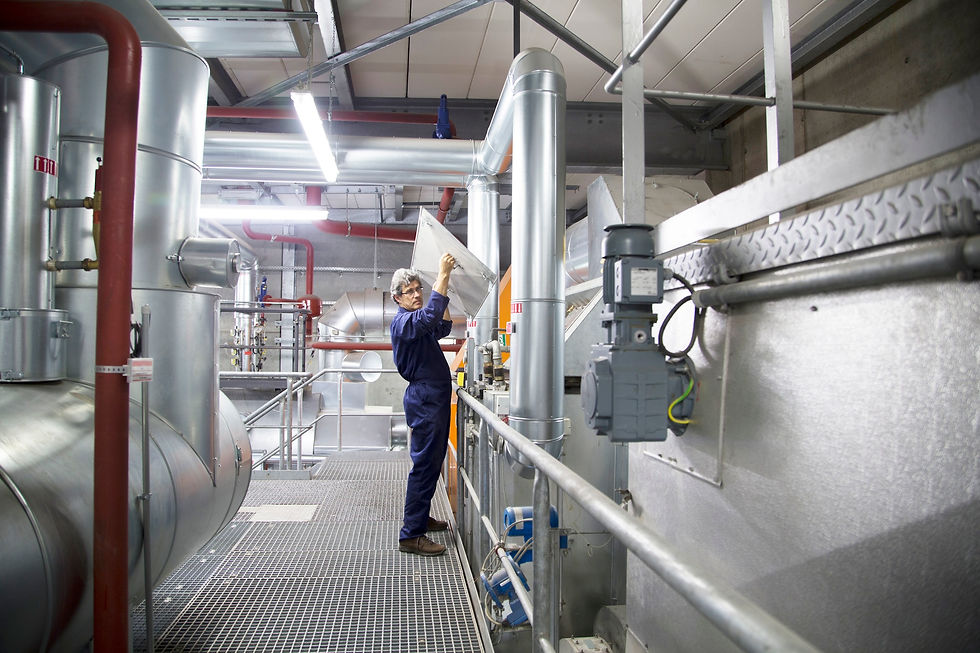
Improving ventilation to address IAQ issues involves a combination of strategies, including upgrading HVAC systems, enhancing natural ventilation, and using supplemental air cleaning technologies. Each building will have unique requirements based on its design, usage, and location, making a tailored approach essential for effective ventilation improvements.
Enhancing Natural Ventilation: Encouraging the use of windows and vents to allow fresh air circulation.
Upgrading HVAC Systems: Implementing advanced filtration systems, like HEPA and activated carbon filters, to trap pollutants effectively.
Increasing Fresh Air Intake: Adjusting the HVAC system to increase the amount of outdoor air being brought into the building.
Targeted Extraction: In areas where contaminants are generated (like kitchens or bathrooms), local exhaust ventilation systems, such as range hoods or bathroom exhaust fans, can be installed to directly remove pollutants.
Portable Air Cleaners: In areas where increasing ventilation is challenging, portable air purifiers with HEPA filters can help reduce airborne pollutants.
UVGI (Ultraviolet Germicidal Irradiation): This can be used in HVAC systems or as standalone units to inactivate airborne pathogens.
Upgrade Ventilation in Existing Structures: Older buildings can be retrofitted with newer ventilation technology to improve air exchange and filtration.
Demand-Controlled Ventilation (DCV): These systems adjust ventilation rates based on occupancy levels, detected by CO2 sensors or other occupancy indicators.
Energy Recovery Ventilators (ERVs) or Heat Recovery Ventilators (HRVs): These systems help in efficiently exchanging indoor and outdoor air while minimizing energy loss.
Controlling Sources of Contamination
Effective maintenance and cleaning practices are essential for maintaining and improving IAQ. They help manage sources of indoor air pollution, ensure the efficient operation of HVAC and humidity control systems, and reduce the presence of allergens and irritants. These practices not only contribute to the health and well-being of the building's occupants but also enhance the overall environmental quality of the indoor space.
Using Low-VOC Materials: Opting for eco-friendly products can significantly reduce chemical pollutants.
Regular Cleaning and Maintenance: Adhering to a strict cleaning regime helps in minimizing dust and allergen accumulation.
Regular Monitoring and Maintenance
Through regular monitoring and maintenance, IAQ issues can be identified and addressed promptly, ensuring the health and comfort of building occupants. These practices not only contribute to immediate air quality improvements but also to the long-term sustainability and efficiency of the building's environmental systems.
Periodic IAQ Assessments: Conducting regular assessments ensures ongoing IAQ management.
Filter Maintenance: Regularly replacing and maintaining filters in HVAC systems is vital for their efficiency and effectiveness.
Educating Employees
Educating employees and occupants about IAQ empowers them to be active participants in maintaining and improving the air quality of their environment. This education leads to increased awareness, behavioural changes, better policy adherence, and a stronger culture of health and safety, all of which are crucial for effectively addressing IAQ issues.
When people are informed about how IAQ can affect their health, they are more likely to be proactive in reporting problems and adhering to policies that improve air quality.
Educating occupants on the symptoms of poor IAQ (like headaches, dizziness, respiratory issues) helps in early identification of air quality problems.
Educated occupants are more likely to engage in behaviours that improve or maintain good IAQ, such as avoiding the use of products that emit high levels of VOCs.
Employees can actively contribute to maintaining IAQ, for example, by ensuring proper ventilation in their work areas or managing personal waste and clutter.
The significance of IAQ in commercial buildings is driven by a confluence of health concerns, regulatory requirements, technological advancements, and a growing awareness of environmental issues. These factors together have made IAQ a key component of building design, maintenance, and operation.
Professional IAQ assessments in commercial settings are integral for ensuring a healthy, productive, and legally compliant environment. For a comprehensive assessment, it's often advisable to consult with IAQ professionals who can conduct a detailed evaluation of the building's air quality using advanced tools and techniques. Understanding the various facets of IAQ and implementing strategic improvements can lead to significant benefits, including enhanced employee well-being, increased productivity, and cost savings. Prioritizing good air quality is not just a responsibility—it's an investment in the health and success of your business.
The suite of advanced air filters offered by Blade Air can address a wide range of IAQ challenges effectively. By combining different types of our filters, such a system can tackle particulates, gases, odours, and microbial pollutants, providing a holistic solution to maintaining healthy indoor air quality. Get in touch to learn more about our innovative products and sustainable solutions to optimize IAQ in your commercial buildings.


